But, from the subject’s perspective?
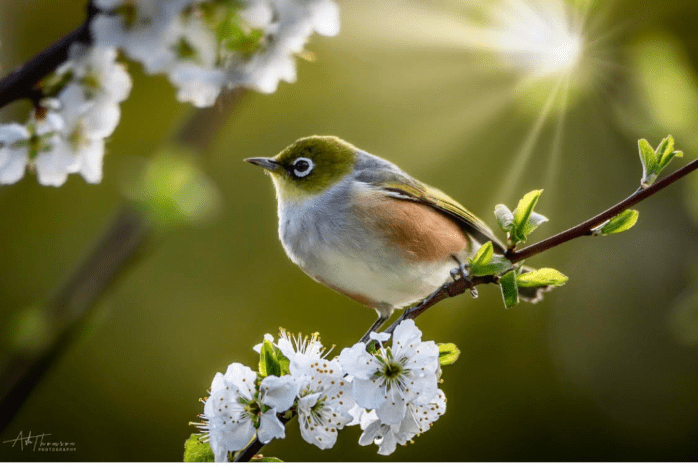
(Photo by Ashley Thomson) The silvereye or wax-eye (Zosterops lateralis), also known by its Māori name tauhou -Wikipedia
By Katherine Jurgens
If you are in the habit of perusing Instagram and other social media sites for inspiring, even outstanding examples of wildlife photography, you have perhaps wondered if some photographers prioritize a spectacular “capture” over the needs and safety of their wild subjects.
Astonishing photos of owls screaming face-first at a camera lens, yellow eyes locked on target, talons spread make Cry Wild wonder how the photographer managed the exact position and timing required for such an epic shot. Or, what about that amusing overhead image of a treed bear? Did the photographer just happen to look up and see a fluffy butt or did they do something that caused the bear to clamber for cover?
.
Instinctively, Cry Wild aspires to “First Cause No Harm” photography principles. However, Cry Wild concedes this Journal isn’t (yet) bursting with images taken by yours truly. Rather than trust this sometimes-contentious subject to intuition, let’s ask experienced nature photographers and wildlife biologists:
What behaviors and actions make someone a responsible wildlife photographer?
“If most of your photos are butt shots, you are clearly doing something wrong.”
Jim Pottkotter, Wildbird Photographer
“All animals, including humans, have a zone of open space and comfort they prefer to maintain between themselves and others,” said Jim Pottkotter, a Tennessee-based wildlife photographer who primarily focuses on birds. “That zone of exclusion varies by species and individuals. Among bird species, for example, Egrets and Kingfishers seem to require an extensive zone, while urbanized pigeons seem to have a modest zone. Understanding your subject’s zone is critical. You usually have to stay outside of it to keep the bird from flying away. If most of your photos are butt shots, you are clearly doing something wrong.”

(Photo by kjurgens) “Clearly wrong.”
In other words…
“A responsible wildlife photographer is someone who gives wildlife their space.”
Eric Magnan – Parks Canada
Eric Magnan is a Travel Media Relation Officer at Parks Canada. He provides information and visual support about Canada’s national parks and historic sites to travel writers, photographers and social media influencers. He also establishes liaisons with Parks Canada field colleagues to facilitate visits to Parks Canada sites. It’s work that enables him to identify what’s required to gather wildlife content responsibly.
“Remember,” Magnan said, “although this may be a once in a lifetime experience for you, the photographer, these types of encounters may be happening many times a day for that particular animal. Bring a telephoto lens to capture an image of a wild animal in its natural environment. Don’t surround, crowd or follow the animal.”
But, what constitutes crowding?
“The biggest clue is if the animal is running away from you as if its life depends on it,” said Cornell University’s Cornell Wildlife Health Lab (CWHL).
“There have been stories of animals like sea-turtles ‘accidentally’ chased into bad situations, into boats, in their efforts to get away from persistent photographers,” said CWHL. “A responsible wildlife photographer respects the animal’s space and doesn’t disrupt their natural behavior. If the animal is moving away from you, you are too close.”
How do you know when close is too close?
Magnan said Parks Canada requires photographers, and indeed all visitors, to stay at least 30 meters (three buses) away from large animals such as deer, moose and elk, and 100 meters (ten buses) away from bears, wolves, coyotes and cougars.
These are not arbitrary distances. They have been established by wildlife biologists based on behavioral and physical profiles of specific species. These distances give wildlife space to stay put or seek cover on their own terms, to behave as they will within their habitat without humans forcing a stressful escape or provoking a confrontation.

Image © National Park Service
“When working as a guide in Yellowstone National Park, I often saw people put themselves and wildlife in danger just to get the ‘perfect shot,'” said wildlife biologist Katrina Talbot. “I have seen people trampled by bison, charged by bears and bitten by ground squirrels…just to try to get that photo.”
Talbot, a deft wildlife photographer herself, currently works for the New York State Department of Conservation’s Hunter Education Program. She also coordinates the department’s Becoming an Outdoors-Woman initiative. “Wildlife will only be tolerant to a certain point,” she said, “and people forget that they are truly wild and will react appropriately when they feel threatened.”
And that puts the onus of appropriate behavior on the photographer.
So, how might photographers make our activities more beneficial than intrusive?
“Never forget that wildlife photography is a Hands-Off pursuit,” said CWHL. “Picking up smaller species like amphibians or reptiles to position them for your ideal spot or photo is an intrusive tactic and often harmful.”
Instead of intrusive boldness, Pottkotter recommends cultivating a “go-slow” approach. “Anyone who cares about nature knows intuitively when wildlife is stressed,” he said. “Evasive and escape behavior is easy to identify. For example, while some birds will fly away no matter what you do, many others won’t treat you like a predator if you don’t act like a predator.”
Another caveat for photographers striving to act responsibly in wild places? “Never turn your back on wildlife or attempt to take a photo of people with wildlife in the background,” said Magnan. ” Surprising wildlife can cause stress to the animal and create a dangerous encounter. You can help eliminate that possibility by noticing ‘signs’ that wildlife might be nearby, including fresh tracks, droppings or freshly scraped soil or tree bark. Also, never wear ear buds or headphones when out on the trails.”
And, as for those trails? Stick to them. As Magnan said, “When visiting a national park, always stay on designated trails and respect area closures and restrictions. Trails in Parks Canada places are designed to take you to interesting places while keeping you safe from hazards and protecting the environment. ”
And, before you do leave home, familiarize yourself with your destination, its features and trail systems. A responsible photographer, and respectful wilderness visitor in general, plans ahead, follows park rules and accepts that wilderness settings are subject to change.
F isn’t just for f-stop. Ethical Photography Requires Flexibility
“Photographers have many options to ‘get that shot,” said Patrice Fisher, a Los Angeles, California artist, photographer and connector. “Rather than risk disrespecting or stressing wildlife, bring various types of lenses on your outings, change perspectives or your own position.”
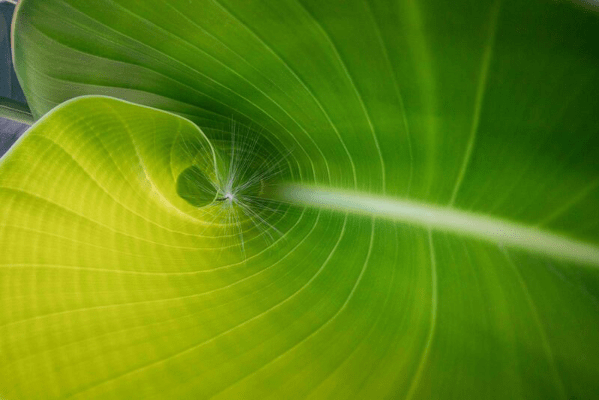
(Photo by Patrice Fisher) With permission from Patrice Fisher Photography © 2023.
“Generally, if a photo isn’t right the first attempt, it’s the photographer not the wildlife who needs to adapt,” said Ashley Thomson, a Tasmanian wildlife photographer who specializes in birds, pelagic wildlife and Australia’s native endangered species. “Get further away. Use longer lenses. Use hides and above all, be patient.”
And be discreet. Pottkotter advises photographers to minimize movement and watch your subject indirectly. “Let them get comfortable and investigate you rather than you chase after them,” he said. “Sitting quietly near feeders or where there’s a water supply nearby while you read a book will provide many more intimate bird encounters than peeking around every bush and tree in the area.
“Birds will be much more comfortable as long as you do not make any sudden movements,” he continued. “It takes discipline to move slowly when you are trying to photograph a bird that may naturally fly away at any movement, but the discipline of not stressing birds yields more photos. It also takes time. If you only have thirty minutes to get a photo, you are not likely to use those thirty minutes successfully.”
NYDEC Wildlife Biologist Talbot tallies the art of patience this way: “You must be patient, aware of your surroundings and determined. Quite often, ethical wildlife photography is a waiting game. Success often hinges on the amount of research and preparedness the photographer puts in ahead of time.”
So…?
Responsible Photographers Do Their Homework
“You might not know that a bird is stressed unless you know how it behaves when it is not stressed.”
Jim Pottkotter
“Learn about the birds you can reasonably expect to see where you are,” said Pottkotter. “Find out if they migrate, how they court, nesting behavior, what they eat, their preferred habitat, when they molt and anything else you can learn out about them.”
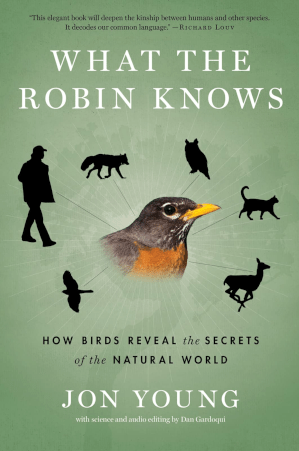

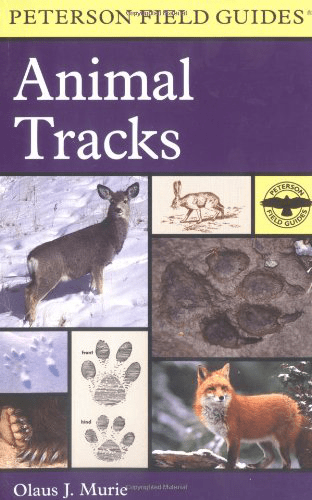
“A responsible wildlife photographer is someone who respects the animal and is informed about its natural history.” Cornell Wildlife Health Lab
“You have to start by just observing the bird without any interaction,” continued Pottkotter. “You might not know that a bird is stressed unless you know how it behaves when it is not stressed. Common examples of stress include flying away in a startled manner, making distress calls or the sudden appearance of other birds in a mobbing response to a predator or other threat, in this case, you.”
Threatening or harassing behavior, whether intentional or not, holds consequences for people, too.
“Some photographers will try to attract wildlife with food,” said Magnan. “But feeding wildlife in a Canadian national historic site or national park is illegal and you may be charged under the Canada National Parks Act.”
Photographers should know that feeding wildlife is also prohibited in U.S. State, National and Federal Parks and can incur hefty fines. Still, that’s nothing compared to what it can cost wildlife.
“Some of our local residents feed bread to wild ducks,” said Thomson. “Now the ducks are unafraid of humans in areas where dogs are running off lead. I have seen too many horror stories of what results from that.” (And, by the way, feeding ducks is NEVER a good idea, whether you’re in Hobart, Hawaii or … wherever there are ducks.)
Thomson said attracting birds with “call-back systems” is also “generally frowned” upon by ethical wildlife photographers. “Luring a bird closer with recordings of that bird’s call can disrupt patterns of behavior, especially around breeding season.”
Even so, as Pottkotter put it: “Contradictions in what is considered ethical behavior abound. In many places, using calls to attract birds IS prohibited or discouraged, but every birding phone app seems to have that feature. In many parks, feeding wildlife, including birds, is banned, but there are often feeders at park registration centers.”
Indeed, baiting wildlife subjects by any means; with food, calls, or, if they are predators something that mimics prey, is a controversial subject deserving more space than this Journal entry allows. For more comprehensive articles, please consider visiting Audubon’s Guide to Ethical Bird Photography and “Outside” magazine’s “The Ethics of Wildlife Photography” .
Drones are another vector of stress and consequences
“I think it is important to note the risk drone-using-videographers create in their persistence to get their ‘natural’ video content,” began CWHL, “risks which then lead to the animal’s injury or death. There have been instances when bears, big horn sheep and mountain goats were injured or died while being chased by a videographer’s drone.”
With that in mind, CWHL said part of being a responsible photographer includes making yourself aware of state and local wildlife harassment laws.
For instance, The National Park Service prohibits drones in all of its 417 parks. Violators can face maximum penalties of six months in jail and a $5,000 fine. But, whether or not photographers and wildlife researchers can use drones in state and local parks is less consistently clear. Tech writer Jamie Cole offers helpful guidance in his article: “Drone Laws National Parks [March 2023] [Rules & How To Register].”
As for Canada, Magnan said, “Drones are prohibited in all Parks Canada places because they disturb wildlife, disrupt their natural behaviors and risk their injury. Photographers who defy the drone ban risk legal charges and fines up to $25,000 under the Canada National Parks Act. “
Cry Wild suggests you save wildlife and yourself the trouble and cost. Better to invest in a good lens and leave your drone in the car, or better, still at home.
“Be a responsible human outside your home because when you leave yours, you step into someone else’s home.”
Patrice Fisher – Photographer
Leave No Trace — Reset the Setting
CWHL said ethical photographers leave the environment as they found it. “Often photographers ‘make a space’ to create a setting or to hide from their subject but then fail to ‘reset the space’ to what it was. Remember, that habitat is a shared space and many species overlap within it. A small change can be devastating to a species you weren’t even aware of impacting.”
Which speaks to Patrice Fisher’s point about entering someone else’s home when you leave your own.
“Whether out hiking or in the wilderness or in my backyard, I am surrounded by living energies such as plants, animals and rocks, living their lives, just as we are,” she said. “I don’t define ‘responsible nature photography’ any differently than the way I define responsible behavior in Nature. When among Nature, and all of its children (including humans,) we should be respectful of each other and our surroundings. Always.”
Does Such Respect Enable Photographers to Contribute to Conservation?
“Wildlife photography is key to engaging the general public and exposing them to nature in a way that they may otherwise never be able to experience.”
Katrina Talbot – NYSDEC Wildlife Biologist
Certainly it isn’t everybody who has the opportunity, means or ability to photograph wildlife, especially in some of the natural world’s more dynamic environments.
“When I was a child, the images in National Geographic magazines sparked my interest in wildlife and nature,” said Talbot. “Those images opened up a world of possibilities to me. The vast majority of the world’s people never get to see or interact with wildlife, so conveying its beauty, ecology and plight through photographs is essential to its relevancy.”
Be that in a wilderness far away…

(Photo by Ashley Thomson) A fascination with the Shy Albatross finds Thomson joining ocean-going pelagic photoshoots.
…or as close at hand as a postage stamp.
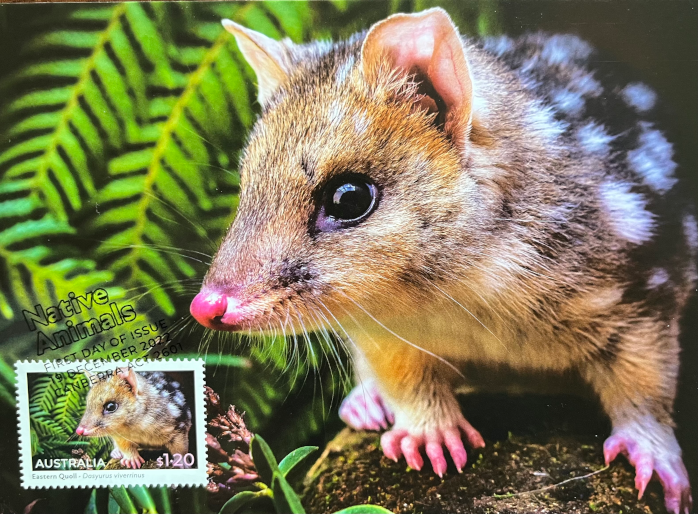
Ashley Thomson’s Eastern Quoll photo represents one of four endangered species featured in Australia Post’s Native Animals issue.
The Cornell Wildlife Health Lab’s team roundly agreed: “Responsible wildlife photographers can contribute to conservation by including information with their photos about the species and the importance of protecting their habitat. Sharing photographs with others for education and research is also helpful.”
NOT so helpful? Sharing specific details like the exact location of a photograph. “Especially if the animal is a member of a protected or endangered species,” added CWHL. “This avoids attracting too much attention to the animal, possibly protecting it from unethical behavior by others.”
And then, there are times when even the most discreet photographer might choose to remove themselves and let it be.
The Shot Not Taken
“Some shots are only meant to be kept in your mind and not captured.”
Patrice Fisher – Photographer
“When photographing wildlife, it is essential to do no harm,” said Talbot, “and to do as little to influence the wildlife habitat as possible. An essential characteristic of an ethical photographer is someone who is willing to give up a good photo for the sake of the animal.”
For example, Jim Pottkotter said, “I rarely photograph nesting or very young birds. They are very vulnerable at those stages. I also avoid extended familiarization with the same birds. And, while I will take advantage of photographing birds that are familiar with people near feeders and in parks, my ideal photo of a bird is a wild one I’ve never seen before and will likely never see again, keeping them wild.”

(Photo by Jim Pottkotter) – taking a page from Pottkotter’s book: “Random Field Notes of Birds Along the Trail.”
“Keeping wildlife wild is a shared responsibility,” said Magnan. “We all have a role to play. Together we can contribute to the successful coexistence of people and wildlife. Everyone’s actions matter. As we like to say at Parks Canada, ‘When you leave a national park … leave it wild.”
Thomson concluded, “Simply put, ethical wildlife photography is being respectful of the animal’s wellbeing. I have witnessed disruptions and lost breeding opportunities of endangered animals due to photographers who put the image first. Before photographing wildlife, always ask yourself this: ‘Is what I’m doing having an impact on the health or behavior patterns of the creature whose image I am trying to capture?'”
Wildlife Biologist Talbot said if she had a chance to meet with wildlife photographers eager to nurture a “first cause no harm” mindset she would encourage them to think of their goal before going afield.


(Slideshow Photos by NYSDEC Wildlife Biologist Katrina Talbot) l-r American Bison, Bald Eagle, Whooping Cranes, Grizzly family.
“Is their goal to get an exceptional shot?” she’d ask them. “Or, is it to photograph wildlife behaving naturally in their natural habitat? Most often, the beauty of wildlife photography does not lie in capturing an exciting event, but in capturing the true nature of an animal exhibiting behaviors as if you were not there at all.”

About the photographers…
Patrice Fisher’s work graces the Kaiser Medical Office Buildings in Baldwin Hills, Crenshaw and Santa Rosa, California. It’s also featured in The Curve Housing Project and various private collections. She always packs a macro lens along with her wide angle and telephoto lenses. “Macro photography has zillions of worlds within worlds. If your eyes are looking for incredible details, which are every where, you will see the unexpected.”
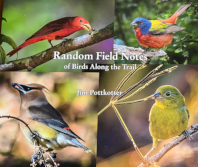
Jim Pottkotter’s work appears in his delightful and informative: “Random Field Notes of Birds Along the Trail.” Available through his website. Gear of choice: NIKON D500 with NIKON 200-500mm f5.6 lens. An extended battery pack lets this “opportunistic photographer ramble for hours, exploring whatever looks promising.” Glasz Art Photo Journal offers an interesting conversation with him. Find him @HappyPixr on Twitter and Instagram.

Ashley Thomson of Tasmania, Australia, took his first wildlife photo on a 2013 vacation in the US. “I photographed a wild deer and from that moment, I was hooked!” His work is used by many organizations, including Tourism Tasmania and World Wildlife Federation Australia. It’s also on Australian postage stamps. He pairs 150-600mm lenses with various NIKON cameras.
If you want to learn more about Ethical Wildlife Photography, please consider listening to National Public Radio’s conversation with wildlife photographer and conservationist Melissa Groo. The production, Is It Ever Morally Wrong To Take Pictures Of Animals? One Wildlife Photographer Says Yes was presented by WBUR in Boston.
These government sites will help you understand what constitutes harassment as defined by Federal Law.
The US Fish and Wildlife Service Endangered Species Act.
 Cry Wild